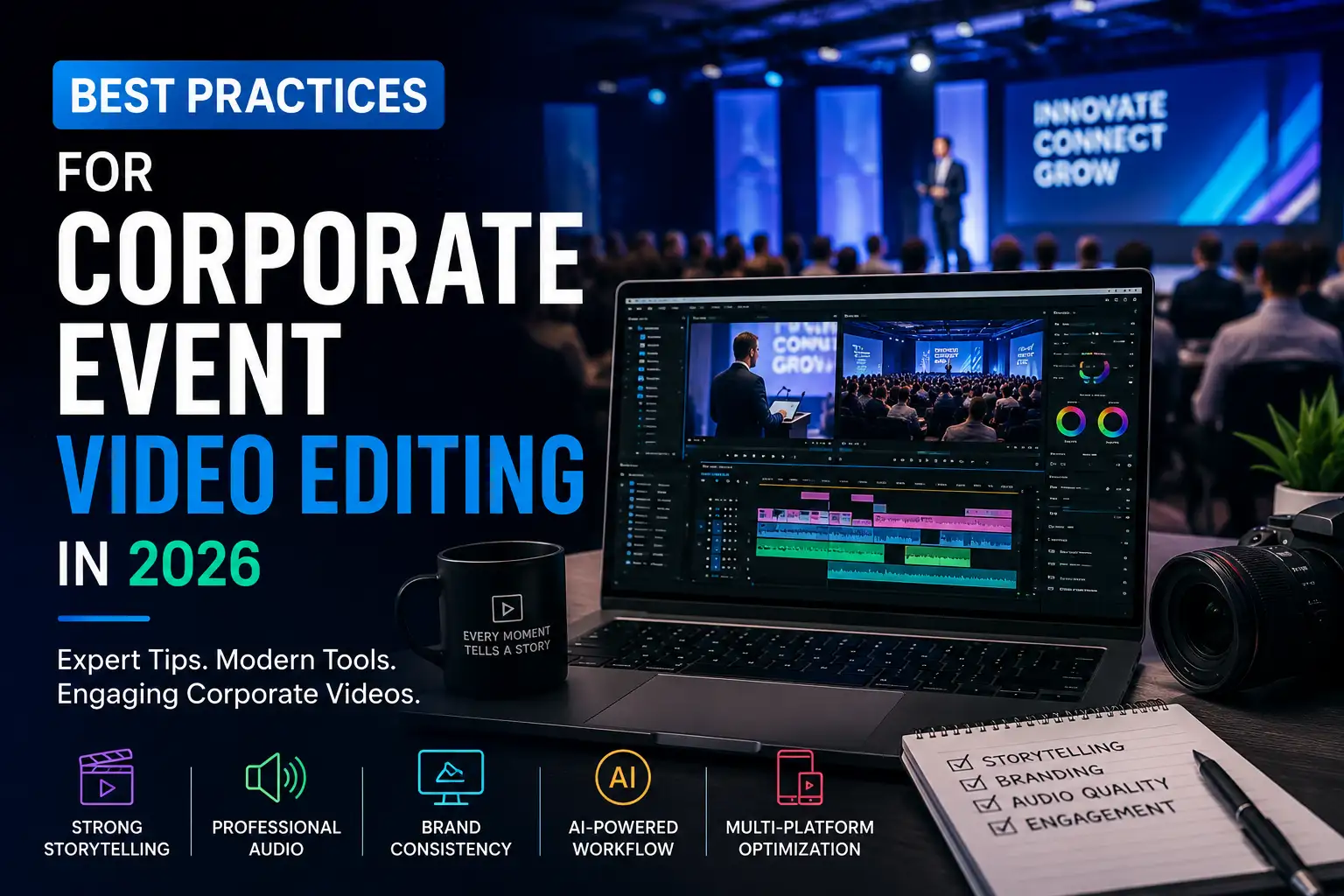

Corporate events have evolved significantly over the last few years. Businesses now use video content not only to document conferences, seminars, product launches, award ceremonies, and networking events but also to build brand awareness, engage audiences, and create long-term marketing assets. As a result, Corporate Event Video Editing has become one of the most important parts of the production process.
A well-edited corporate event video does much more than show what happened during an event. It tells a story, highlights key moments, reinforces brand identity, and keeps viewers engaged from beginning to end. Even the most professionally filmed event can feel dull and ineffective if the editing process is not handled properly.
In 2026, audience expectations are higher than ever. Viewers are accustomed to polished content on social media, streaming platforms, and business websites. They expect smooth transitions, clear audio, engaging visuals, and concise storytelling. This means that modern Corporate Event Video Editing requires both technical expertise and strategic thinking.
In this guide, we will explore the best practices for Corporate Event Video Editing in 2026. We will cover planning, storytelling, audio enhancement, branding, pacing, platform optimization, and many other essential techniques that help transform raw footage into compelling corporate content.
Understanding the Purpose Before Editing
One of the biggest mistakes editors make is jumping straight into the editing timeline without understanding the video’s purpose.
Successful Corporate Event Video Editing starts with identifying the goals of the project. Every corporate event video serves a specific purpose. Some videos are designed to promote future events. Others are meant to showcase company culture, highlight keynote speakers, present product launches, or provide event recaps.
Before editing begins, we always recommend asking several key questions:
What is the primary goal of the video?
Who is the target audience?
Where will the video be published?
What message should viewers remember?
The answers to these questions influence every editing decision. The pacing, music, graphics, duration, and storytelling structure should all support the intended objective.
When editors understand the purpose from the beginning, Corporate Event Video Editing becomes more focused and effective.
Organize Footage Before Building the Timeline
Modern corporate events often generate hundreds of video clips from multiple cameras, drones, smartphones, and audio recording devices.
Without proper organization, editing becomes slow and inefficient.
Before creating the first sequence, it is important to organize footage into clearly labeled folders. Common categories include keynote speeches, audience reactions, networking sessions, interviews, B-roll footage, stage presentations, product demonstrations, and venue shots.
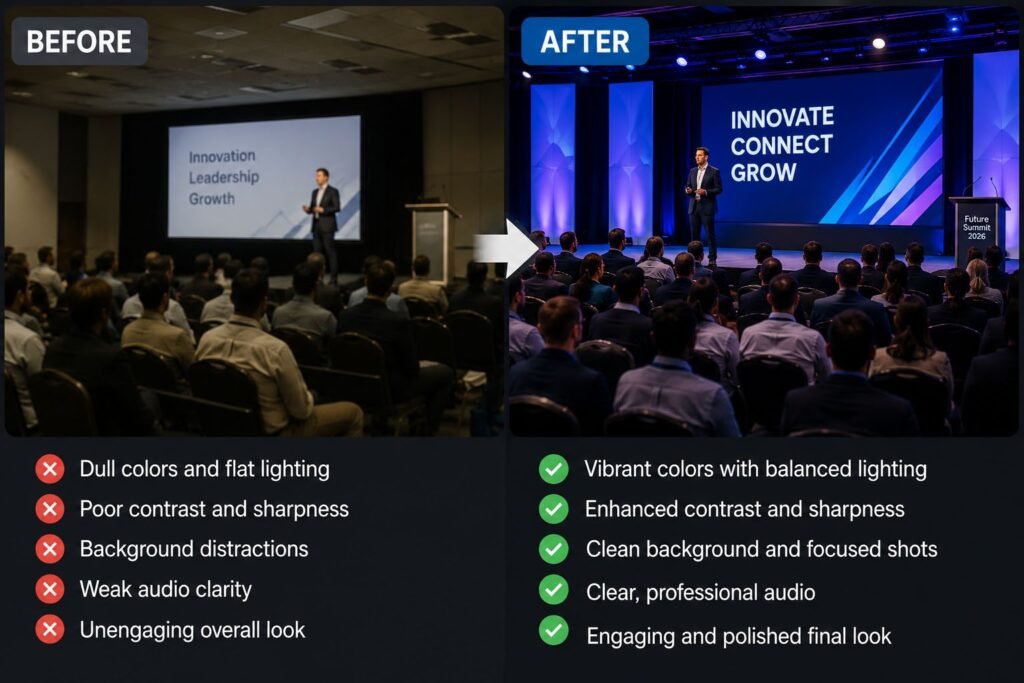
Professional Corporate Event Video Editing workflows also include reviewing all footage and marking standout moments before building the timeline. This approach saves significant time later in the editing process.
In 2026, AI-assisted editing tools can help categorize footage automatically, but manual review remains essential because it allows editors to identify emotional moments, audience engagement, and important interactions that automated systems may overlook.
Focus on Storytelling Rather Than Documentation
One of the most important trends shaping Corporate Event Video Editing in 2026 is the shift from simple documentation to strategic storytelling.
Many businesses still assume that event videos should show everything that happened. In reality, viewers rarely want to watch hours of raw event footage.
Instead, they want a concise and engaging story.
A strong corporate event video often follows a simple narrative structure. It begins by introducing the event and creating excitement. It then highlights key speakers, important announcements, audience participation, and memorable moments before concluding with a clear takeaway.
Storytelling helps viewers stay engaged because it provides context and emotional connection.
When approaching Corporate Event Video Editing, think like a storyteller rather than a recorder. Focus on moments that communicate value and support the event’s objectives.
Create a Strong Opening
The first few seconds of a video determine whether viewers continue watching.
Attention spans continue to shrink, making strong openings more important than ever.
An effective introduction often includes dynamic venue shots, audience reactions, keynote highlights, branded motion graphics, and energetic music.
The opening should immediately answer an important question:
Why should someone keep watching?
For example, a technology conference recap may begin with a powerful quote from a keynote speaker combined with fast-paced visuals from the event floor.
A leadership summit may open with inspiring moments and audience engagement.
High-quality Corporate Event Video Editing prioritizes impactful openings because viewer retention is often highest during the first thirty seconds.
Keep the Pace Engaging
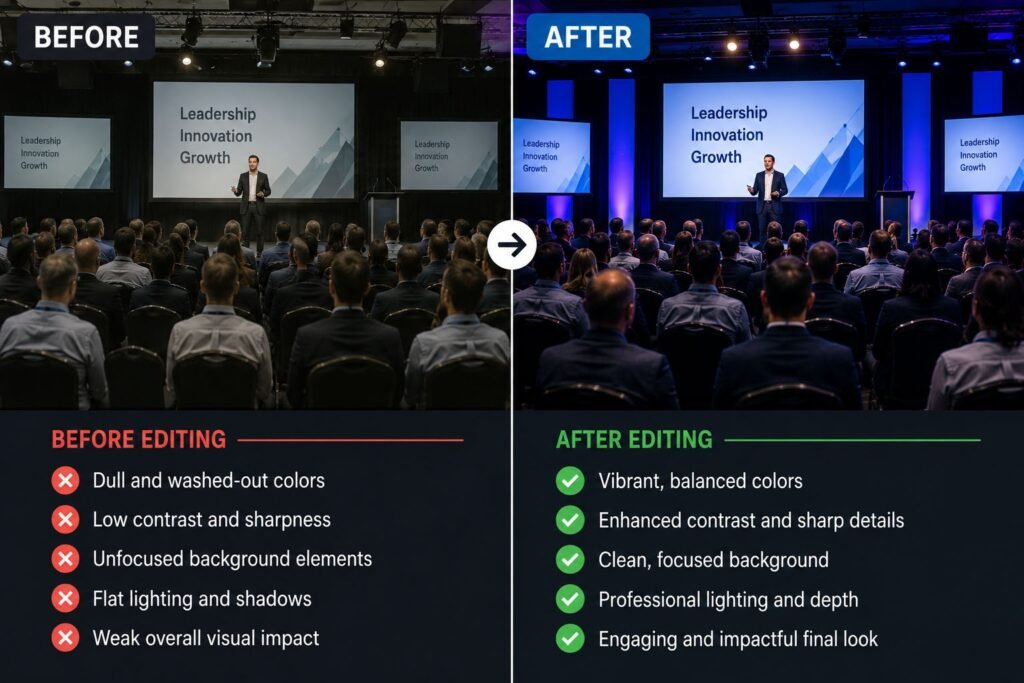
Pacing plays a major role in viewer engagement.
Corporate videos are often criticized for being too slow or overly long. Effective editing solves this problem by maintaining momentum throughout the video.
This does not mean every cut should be fast.
Instead, editors should vary pacing based on the content. Exciting moments such as product launches, networking sessions, and audience reactions can use quicker cuts. Speaker presentations and interviews may require slower pacing to allow viewers time to absorb information.
Modern Corporate Event Video Editing focuses on balancing information with entertainment.
When reviewing your timeline, ask whether every scene contributes value. If a section feels repetitive or unnecessary, trimming it usually improves the final result.
Prioritize Professional Audio Quality
Many viewers will tolerate average visuals, but poor audio quality can cause them to stop watching immediately.
This makes audio enhancement one of the most critical aspects of Corporate Event Video Editing.
Corporate events often present audio challenges including background noise, crowd chatter, room echo, microphone interference, and inconsistent volume levels.
Editors should carefully clean and enhance audio tracks during post-production. This process may include noise reduction, equalization, compression, and volume balancing.
Speech should always remain clear and easy to understand.
In 2026, AI-powered audio restoration tools have become increasingly sophisticated, helping editors improve recordings that would previously have been unusable.
However, technology should support—not replace—careful listening and manual adjustments.
Use B-Roll Strategically
B-roll footage adds depth and visual interest to corporate event videos.
Examples include audience interactions, venue details, registration areas, networking conversations, product demonstrations, exhibition booths, and behind-the-scenes moments.
Strategic use of B-roll improves Corporate Event Video Editing by breaking up long talking-head segments and creating smoother transitions between scenes.
B-roll also helps reinforce key messages. For example, when a speaker discusses innovation, the editor can show product demonstrations or technology displays.
When discussing collaboration, footage of attendees networking can strengthen the narrative.
Rather than treating B-roll as filler content, use it intentionally to support storytelling.
Maintain Consistent Branding
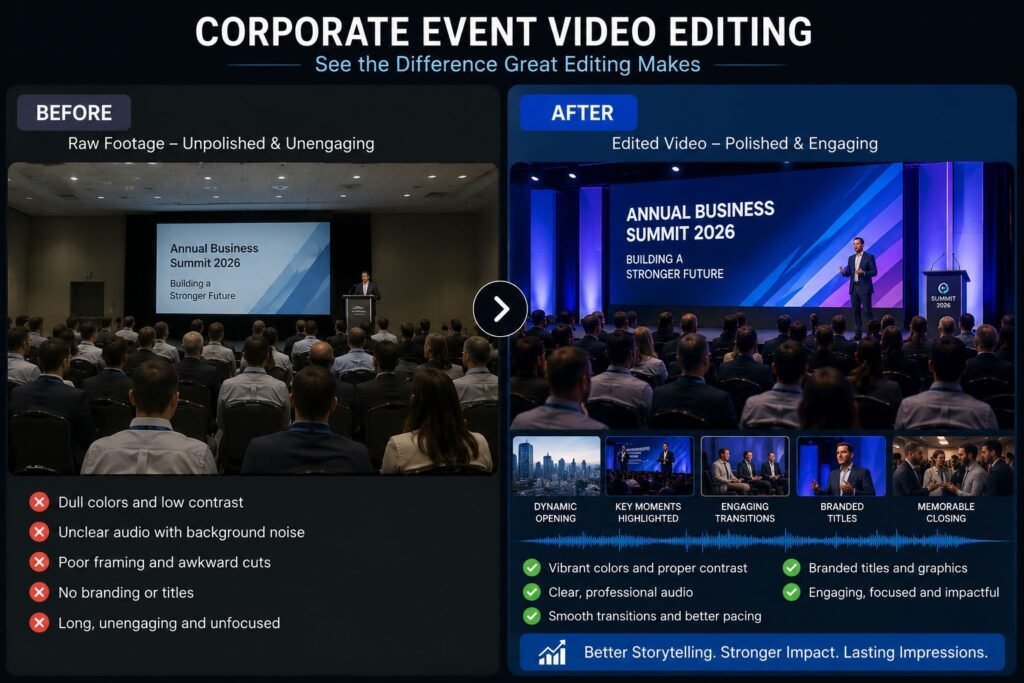
Corporate videos should reflect brand identity throughout the editing process.
Brand consistency builds recognition and professionalism.
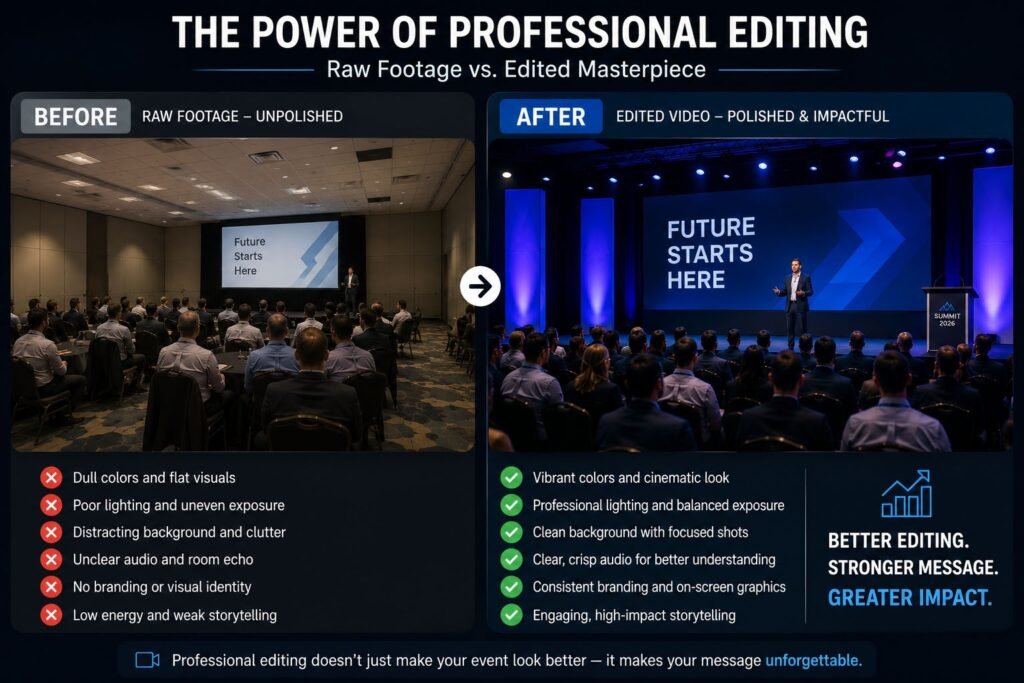
Effective Corporate Event Video Editing includes branded colors, typography, logos, lower-thirds, motion graphics, and title sequences that align with existing brand guidelines.
The goal is not to overwhelm viewers with branding but to create a cohesive visual experience.
Consistent branding also helps videos feel connected to broader marketing campaigns across websites, social media channels, email marketing, and advertising efforts.
For businesses looking to establish a strong visual presence, branded editing is essential rather than optional.
Color Correction and Color Grading Matter
Lighting conditions at corporate events are rarely perfect.
Different cameras, venue lighting systems, LED screens, and stage effects often create inconsistent footage.
Color correction helps ensure that all clips look natural and visually consistent.
Color grading then enhances the overall aesthetic and mood of the video.
Modern Corporate Event Video Editing relies heavily on color management because viewers subconsciously associate polished visuals with professionalism and credibility.
Even subtle adjustments can dramatically improve the perceived quality of a video.
When editing event footage, focus first on achieving consistency across all shots before applying creative color grading styles.
Incorporate Motion Graphics Thoughtfully
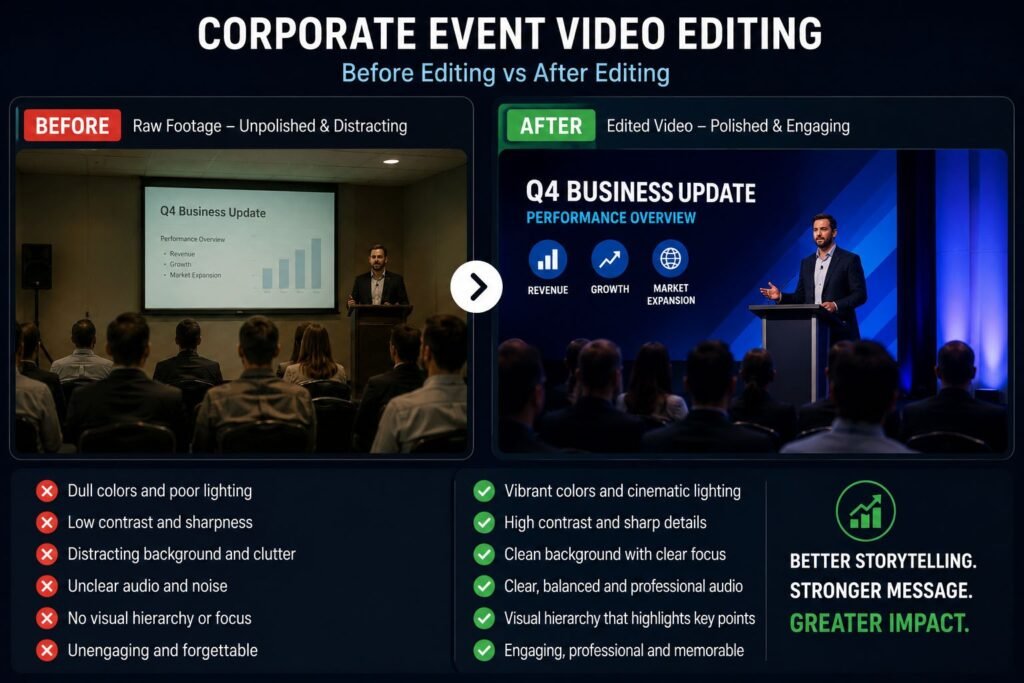
Motion graphics continue to play an increasingly important role in Corporate Event Video Editing.
They help communicate information clearly while adding visual sophistication.
Common examples include speaker introductions, event statistics, agenda highlights, social media handles, animated logos, and call-to-action screens.
The key is moderation.
Overusing motion graphics can distract viewers from the actual content. Effective graphics support the message without dominating the screen.
Professional motion design should feel integrated into the storytelling process rather than added as decoration.
Optimize Videos for Multiple Platforms
One of the biggest changes in Corporate Event Video Editing is the need to create content for multiple platforms from a single event. A conference or corporate gathering may produce content for a company website, YouTube, LinkedIn, Facebook, Instagram, and even internal communication channels.
Each platform has different audience behaviors and technical requirements. A video that performs well on YouTube may not be ideal for LinkedIn or Instagram. This is why editors should think beyond a single master video.
In 2026, successful Corporate Event Video Editing often involves creating several versions of the same content. A full event recap may be uploaded to YouTube, while shorter highlight clips can be shared on social media. Speaker soundbites can become LinkedIn posts, and quick behind-the-scenes clips can be used for Instagram Reels.
Planning for multiple formats during editing ensures that businesses maximize the value of every event recording. Instead of creating one video, they create an entire content library that can support marketing efforts for months.
Make Captions a Standard Practice
Captions are no longer optional.
Research consistently shows that many viewers watch videos with the sound off, especially on social media platforms. Without captions, valuable information may never reach the audience.
Modern Corporate Event Video Editing includes accurate captions and subtitles as a standard part of the workflow. Captions improve accessibility for viewers with hearing impairments and make content easier to consume in noisy environments.
Captions can also increase viewer retention because people are able to follow along even when audio quality is not ideal.
When adding captions, accuracy matters. Automated transcription tools have improved significantly, but manual review is still necessary to ensure names, technical terms, and industry-specific language are presented correctly.
A polished captioning process enhances professionalism and improves audience engagement.
Use AI as an Assistant, Not a Replacement
Artificial intelligence has transformed Corporate Event Video Editing over the past few years.
AI tools can now identify speakers, remove background noise, create rough cuts, generate captions, organize footage, and suggest highlights automatically.
These technologies can dramatically improve efficiency and reduce production time.
However, the most successful editors understand that AI works best as an assistant rather than a replacement for creative decision-making.
AI may identify technically important moments, but it often struggles to recognize emotional impact, audience reactions, brand messaging, and storytelling opportunities.
The human element remains essential.
In 2026, the best approach is combining AI-powered efficiency with human creativity. This allows editors to spend less time on repetitive tasks and more time crafting compelling stories.
Highlight Key Speakers and Insights
Corporate events often feature keynote speakers, industry experts, executives, and guest presenters.
Their insights are frequently among the most valuable assets captured during an event.
Professional Corporate Event Video Editing ensures that important messages receive proper attention. Instead of showing lengthy, unedited presentations, editors can identify impactful quotes and build engaging segments around them.
A well-placed speaker quote can serve as a powerful transition point within a video. Combining speaker footage with supporting B-roll, graphics, and audience reactions creates a more dynamic viewing experience.
Highlighting valuable insights also increases the likelihood that viewers will share the content with colleagues and professional networks.
Include Audience Reactions and Human Moments
Corporate events are about people.
While presentations and announcements are important, human interactions often create the strongest emotional connection.
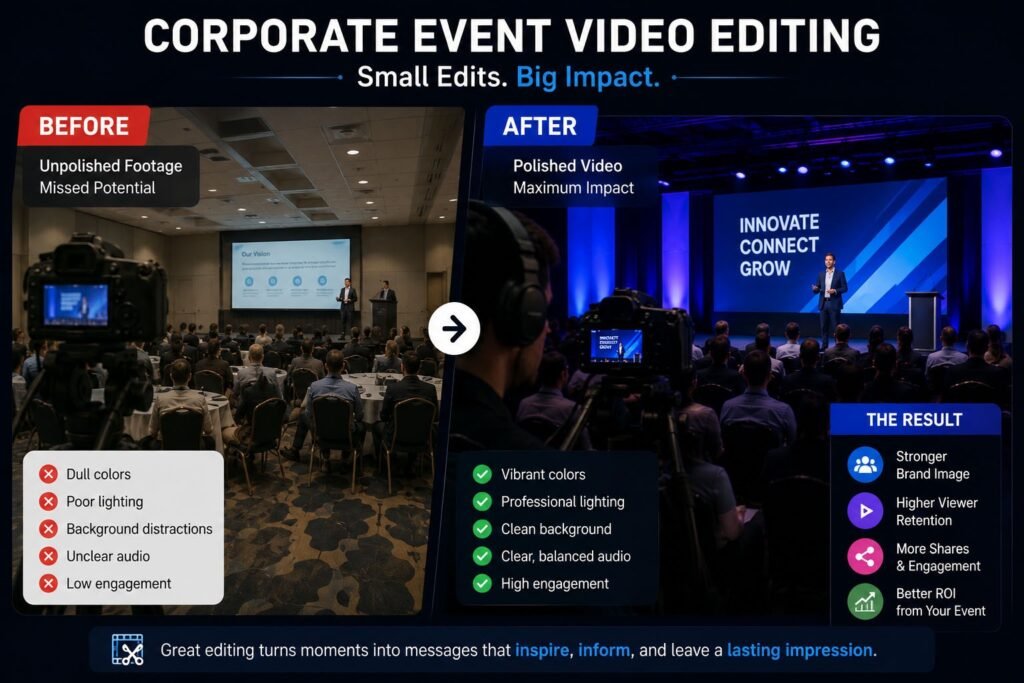
Great Corporate Event Video Editing captures audience reactions, networking conversations, applause, laughter, discussions, and behind-the-scenes moments.
These clips help viewers feel connected to the event experience.
For businesses promoting future events, audience engagement footage can be especially powerful because it demonstrates participation, excitement, and value.
When editing, look for authentic moments rather than staged interactions. Genuine reactions often resonate more strongly with viewers and make videos feel more credible.
Balance Information and Entertainment
Corporate audiences want useful information, but they also expect engaging content.
One challenge in Corporate Event Video Editing is finding the right balance between education and entertainment.
A video filled only with facts and presentations may feel dry. On the other hand, a video focused entirely on visuals may fail to communicate meaningful insights.
The most effective event videos combine both elements.
Strong storytelling, dynamic visuals, clear messaging, professional audio, and thoughtful pacing work together to create content that informs while maintaining viewer interest.
Whenever possible, vary visual elements throughout the timeline. Alternate between speakers, audience reactions, venue shots, graphics, and B-roll to keep the experience engaging.
Create Separate Highlight Reels
Not every viewer wants to watch a full event recap.
This is why highlight reels have become one of the most valuable outputs in modern Corporate Event Video Editing.
A highlight reel condenses the most exciting and memorable moments into a short, highly engaging video. These videos are often used to promote future events, generate social media engagement, and increase brand visibility.
The best highlight reels focus on energy, emotion, and storytelling rather than exhaustive coverage.
By creating dedicated highlight videos, businesses can attract viewers who may not have time to watch longer content while still showcasing the event’s success.
Pay Attention to Video SEO
Video visibility is increasingly important.
Even the most impressive Corporate Event Video Editing project cannot deliver results if people cannot find it.
When publishing videos online, optimization should be part of the strategy.
This includes writing descriptive titles, creating keyword-rich descriptions, adding relevant tags, and using engaging thumbnails.
For example, if the focus keyword is Corporate Event Video Editing, it should appear naturally in video titles, descriptions, supporting articles, and metadata where appropriate.
Search engines continue to prioritize video content, making optimization an important step for increasing reach and visibility.
Businesses that invest in video SEO often see stronger long-term performance from their content.
Common Corporate Event Video Editing Mistakes to Avoid
Even experienced editors can make mistakes that reduce the effectiveness of event videos.
One common issue is creating videos that are too long. Including every moment from an event often results in reduced engagement and lower viewer retention.
Another mistake is neglecting audio quality. Viewers quickly lose interest when speech is difficult to understand.
Inconsistent branding can also weaken the impact of a video. Logos, colors, fonts, and graphics should align with the organization’s visual identity.
Poor pacing is another challenge. Videos that move too slowly may feel boring, while videos that move too quickly may overwhelm viewers.
Effective Corporate Event Video Editing requires careful balance and attention to detail throughout the production process.
Measuring Video Performance
Editing does not end when a video is exported.
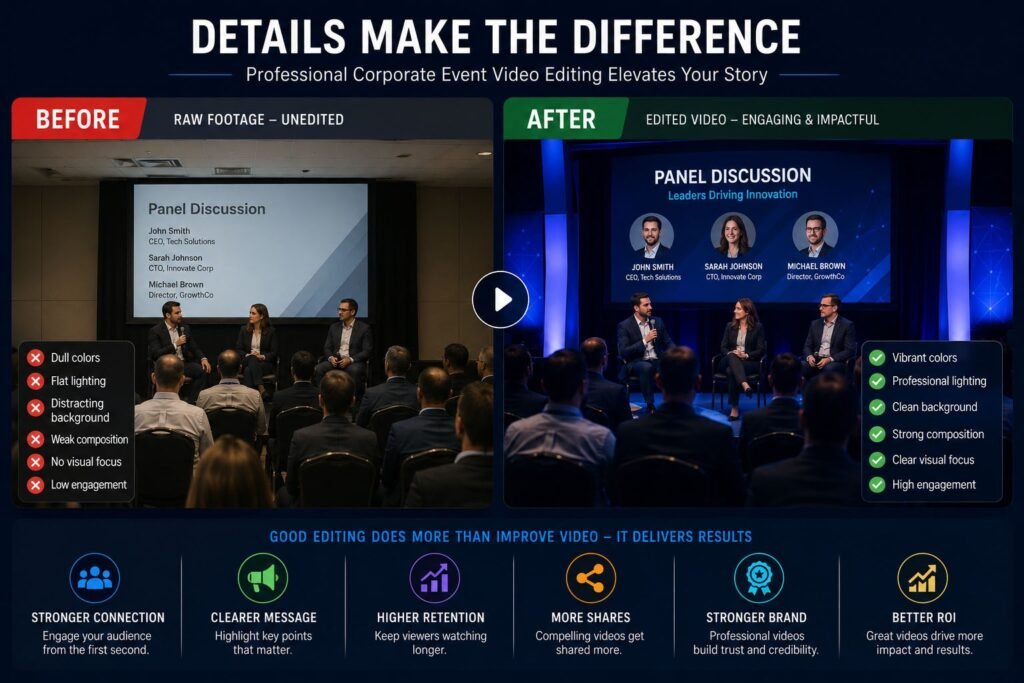
Modern Corporate Event Video Editing should include performance analysis after publication.
Metrics such as watch time, viewer retention, engagement rates, shares, comments, and conversions provide valuable insights.
These analytics help determine which editing choices resonated with audiences and which areas could be improved in future projects.
For example, if viewers consistently drop off at a certain point, editors may need to adjust pacing or content structure.
Continuous improvement based on data helps organizations create increasingly effective video content over time.
The Future of Corporate Event Video Editing
The future of Corporate Event Video Editing looks incredibly exciting.
Artificial intelligence will continue to automate repetitive tasks. Real-time editing workflows will become more common. Interactive video experiences will gain popularity. Personalized video content may allow viewers to explore event highlights based on their specific interests.
At the same time, storytelling will remain at the center of successful editing.
Technology can improve efficiency, but viewers will always connect most strongly with compelling stories, authentic experiences, and meaningful messages.
Businesses that combine innovative technology with creative storytelling will be best positioned to stand out in the growing world of video content.
Final Thoughts
As audience expectations continue to rise, Corporate Event Video Editing has become much more than simply assembling clips together. It involves strategic storytelling, professional audio enhancement, strong branding, engaging pacing, thoughtful motion graphics, platform optimization, and a clear understanding of viewer behavior.
The best practices discussed in this guide can help transform ordinary event recordings into powerful marketing assets that continue delivering value long after the event ends. Whether you are creating conference recaps, leadership summit videos, product launch highlights, training events, or corporate celebrations, investing in high-quality Corporate Event Video Editing can significantly improve audience engagement and brand perception.
At Pixels Artistry, we help businesses turn raw event footage into polished, professional videos that capture attention and communicate results. Our specialized Video Editing Service focuses on storytelling, branding, color grading, motion graphics, audio enhancement, and multi-platform optimization to ensure every project delivers maximum impact.
If you are looking for professional support with your next corporate event video, visit our Video Editing Service page and discover how we can help transform your footage into content that informs, inspires, and drives engagement.

![5 Best Corporate Video Editing Services in Caledon [2026]](https://pixelsartistry.com/wp-content/uploads/2026/06/Corporate-Video-Editing-Service-Caledon-Featured-Image-1.webp)
[…] of the most common questions we hear is: How much do Corporate Video Editing Costs actually amount to in 2026? The answer is not always simple because every project has […]