
Wedding filmmaking has changed dramatically over the last few years. Couples no longer want simple recordings of their ceremony and reception. They want emotional storytelling, cinematic color grading, smooth transitions, crystal-clear audio, and films that feel timeless. That is exactly why learning the right Wedding Video Editing Tips can completely transform your work from average to unforgettable.
When we first started editing wedding films, we realized something important very quickly. Shooting great footage is only half the process. The real magic happens in the editing timeline. The way clips are arranged, how music flows with emotions, how color grading creates atmosphere, and how audio is balanced all determine whether a wedding film feels professional or amateur.
Many beginners spend thousands on cameras, lenses, drones, and gimbals but still struggle to create emotional wedding films because they ignore the editing process. Strong editing is what turns random clips into a meaningful story. That is why understanding professional Wedding Video Editing Tips is essential for every creator who wants to grow in the wedding industry.
In this guide, we are going deep into the most effective techniques we use to create polished wedding films. These are practical, real-world Wedding Video Editing Tips that improve pacing, storytelling, sound design, transitions, color correction, and overall cinematic quality. Whether you are editing your first wedding video or trying to improve your current workflow, these tips will help you produce cleaner, more emotional, and more professional results.
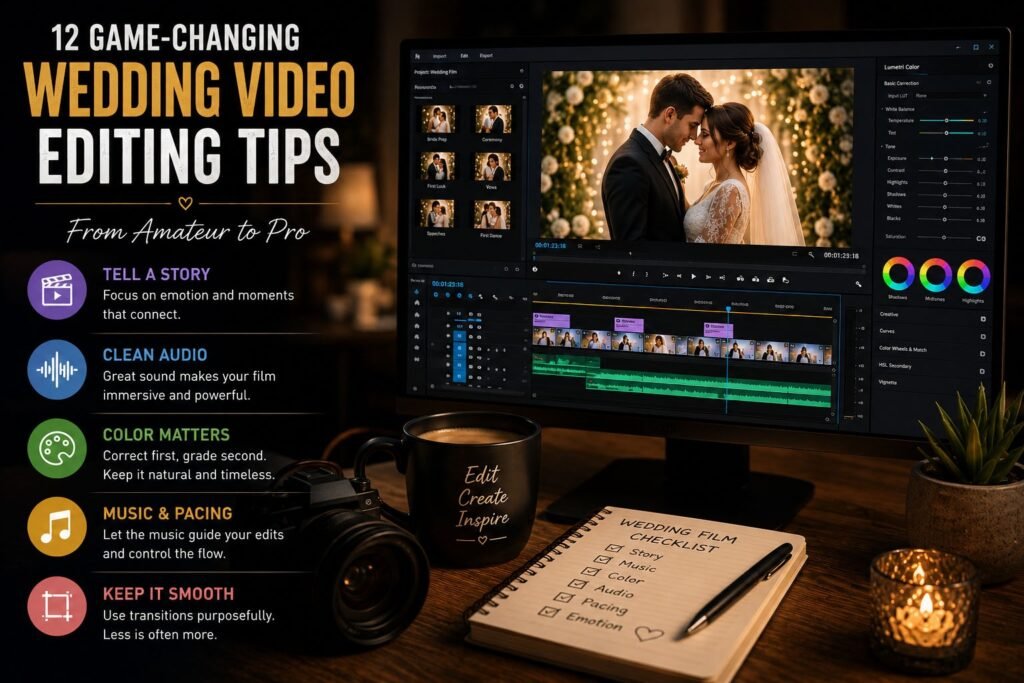
Understand the Story Before You Start Editing
One of the most overlooked Wedding Video Editing Tips is learning to think like a storyteller instead of simply arranging clips on a timeline. A wedding film is not just a collection of pretty shots. It is a story filled with emotions, anticipation, reactions, and memories.
Before we begin editing, we always watch every clip from start to finish. This helps us understand the emotional rhythm of the wedding day. We pay attention to moments like nervous smiles during preparation, emotional reactions during vows, laughter during speeches, and quiet romantic moments between the couple.
When you understand the emotional flow of the event, editing becomes much easier. Instead of randomly placing clips, you begin building a narrative that keeps viewers emotionally connected from beginning to end. Among all Wedding Video Editing Tips, this is one of the most important because storytelling separates cinematic wedding films from basic slideshows.
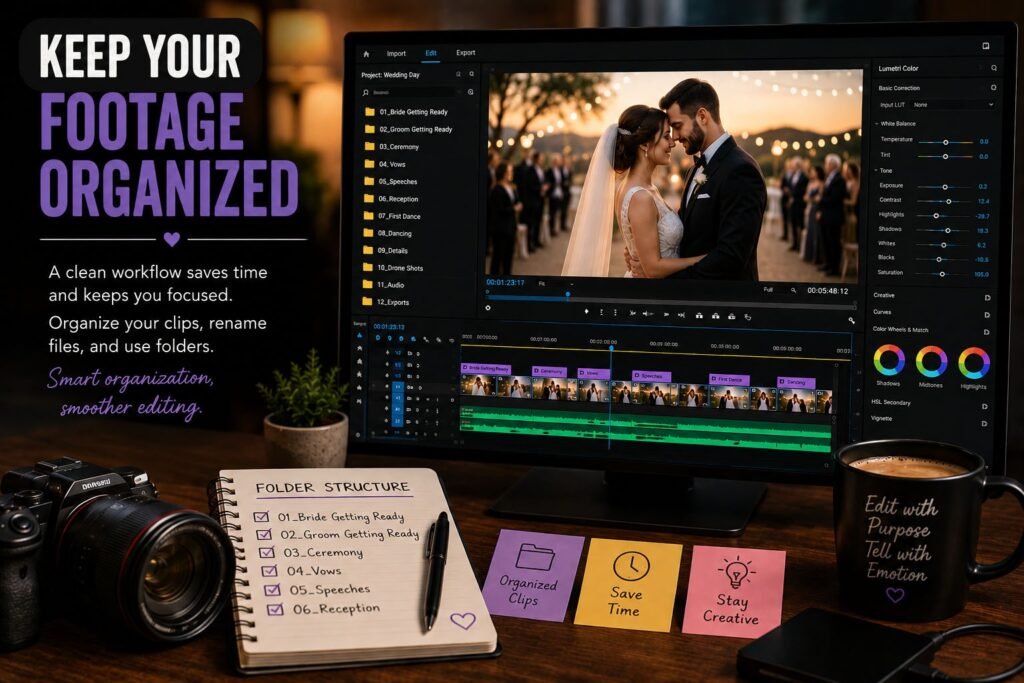
Organize Your Footage Properly
Nothing slows down editing more than messy files. Professional editors spend time organizing footage before touching the timeline. One of the smartest Wedding Video Editing Tips is creating a structured workflow from the beginning.
We usually separate footage into folders like ceremony, reception, bride preparation, groom preparation, drone shots, speeches, dancing, and audio recordings. We also rename important clips so they are easier to locate during editing.
This may sound simple, but organized projects save hours of frustration. They also reduce mistakes and help maintain creative focus. Many beginner editors skip this step and end up wasting time searching for clips instead of building a compelling story.
A clean workflow also helps when revisions are needed later. Wedding clients often request small edits, and organized projects make those changes much easier to handle.
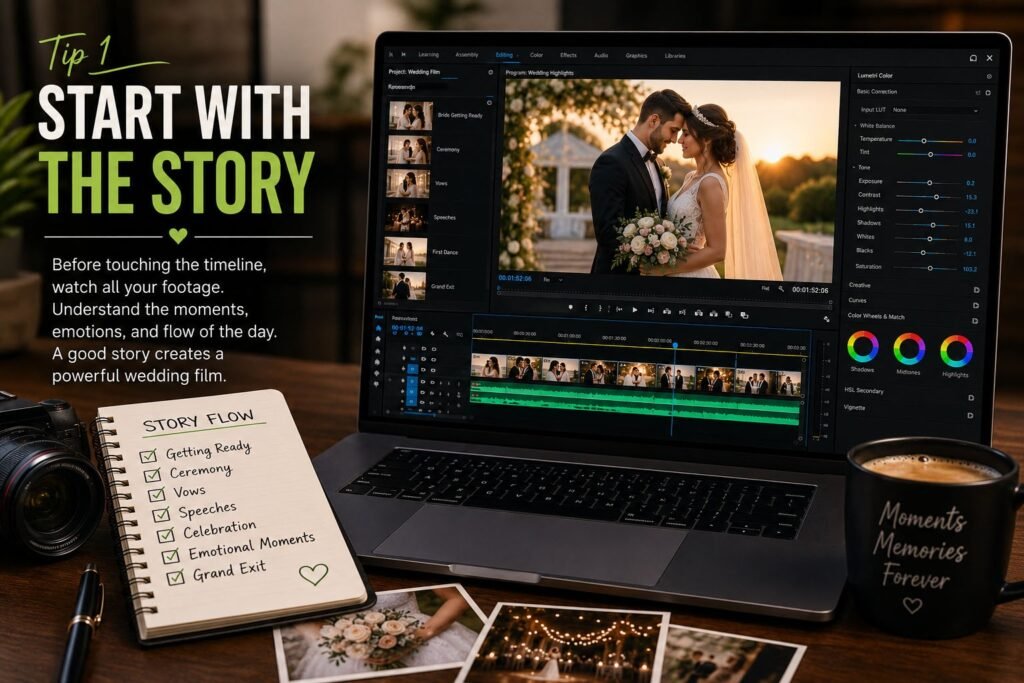
Choose Music Before Building the Main Edit
Music controls emotion more than almost anything else in wedding filmmaking. One of the most effective Wedding Video Editing Tips is selecting your soundtrack early in the editing process instead of waiting until the end.
The right song determines pacing, transitions, emotional intensity, and overall atmosphere. A slow emotional track creates a completely different feeling compared to an energetic cinematic soundtrack.
We usually test multiple songs before committing to one. Once we find the right music, we begin building the story around its rhythm and emotional progression. This creates smoother edits and helps scenes flow naturally.
Pay close attention to crescendos, instrumental changes, and emotional moments in the music. These sections are perfect for transitions, vows, kisses, reactions, and cinematic highlights.
Music synchronization is one of the most valuable Wedding Video Editing Tips because it instantly makes edits feel more intentional and professional.
Focus on Clean Audio Editing
Many editors obsess over visuals while ignoring audio quality. However, poor sound can destroy even the most beautiful wedding film. Strong audio work is one of the most essential Wedding Video Editing Tips for creating immersive wedding videos.
Wedding films usually include vows, speeches, ambient sounds, laughter, applause, and emotional reactions. These elements make viewers feel emotionally connected to the story.
We always clean background noise, balance audio levels, and use smooth fades between clips. If vows or speeches contain distracting sounds like wind noise or microphone hiss, we reduce them carefully during post-production.
Layering ambient audio underneath music also creates depth. Sounds like footsteps, clapping, dress movement, or crowd reactions help wedding films feel more cinematic and realistic.
Professional audio editing often goes unnoticed because it feels natural. But viewers immediately notice when sound quality is poor.
Avoid Overusing Transitions
One of the biggest beginner mistakes is adding too many flashy transitions. While creative effects can occasionally enhance storytelling, excessive transitions usually make wedding films look outdated and distracting.
Among the most important Wedding Video Editing Tips is learning when simplicity creates stronger emotional impact.
Most professional wedding films rely heavily on clean cuts, smooth dissolves, speed ramps, and natural motion transitions. These techniques keep attention focused on the story rather than editing tricks.
Instead of adding random effects between every clip, focus on using movement to create seamless transitions. For example, matching camera movement between scenes can make cuts feel incredibly smooth and cinematic.
Minimal editing often feels more elegant and timeless, especially in emotional wedding films.
Master Color Correction Before Color Grading
Many editors jump directly into cinematic LUTs without properly correcting footage first. This creates inconsistent skin tones, exposure problems, and unnatural colors.
One of the most technical but valuable Wedding Video Editing Tips is understanding the difference between color correction and color grading.
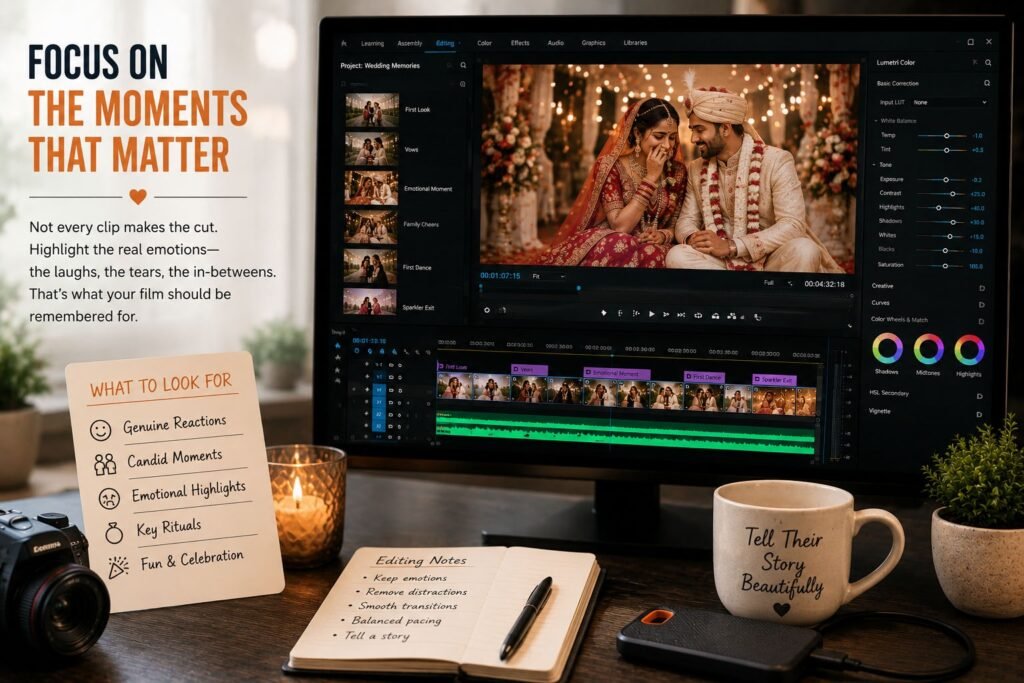
Color correction focuses on balancing exposure, white balance, contrast, and skin tones so all clips match naturally. Color grading comes afterward and adds the cinematic style or mood.
We always correct clips before applying creative looks. This ensures the final film feels polished and consistent from scene to scene.
Wedding films especially require careful skin tone management because couples want natural, flattering visuals. Overly saturated colors or harsh contrast can ruin emotional moments.
Learning professional color workflows takes time, but it dramatically improves video quality.
Use Slow Motion Carefully
Slow motion can make wedding films feel elegant and emotional, but overusing it can reduce impact. One of the smartest Wedding Video Editing Tips is using slow motion selectively during emotionally important moments.
Scenes like walking down the aisle, exchanging vows, first dances, or emotional reactions often benefit from cinematic slow motion. These moments feel more dramatic when viewers have time to absorb expressions and details.
However, slowing down every clip makes pacing feel repetitive and unnatural. Good wedding editing balances real-time footage with carefully chosen slow-motion sequences.
We also recommend shooting higher frame rates only when necessary. Properly planned slow-motion footage always looks smoother and more professional during editing.
Create Better Pacing Throughout the Film
Pacing is one of the hardest editing skills to master. A wedding film should feel emotional and cinematic without becoming boring or overly long.
One of the most powerful Wedding Video Editing Tips is learning how to control emotional energy throughout the timeline.
We usually begin with slower emotional moments during preparation scenes, gradually increase intensity during ceremonies and celebrations, and then create emotional closure near the end.
Fast cuts work well during dancing and energetic reception scenes, while slower pacing feels better for vows and intimate moments.
Good pacing keeps viewers engaged from beginning to end. Poor pacing causes even beautiful footage to feel exhausting or repetitive.
Use Multiple Camera Angles Intelligently
Modern wedding shoots often involve multiple cameras, drones, and handheld footage. Knowing how to combine these angles smoothly is another essential part of professional Wedding Video Editing Tips.
Different angles help create visual variety and emotional depth. Wide shots establish the environment, medium shots show interaction, and close-ups capture emotion.
When editing ceremonies or speeches, switching between angles also hides cuts and improves continuity. Multi-camera editing creates smoother storytelling and makes events feel more immersive.
However, random angle changes can become distracting. We recommend switching perspectives intentionally based on emotion, movement, or dialogue changes.
Thoughtful camera selection creates a much more cinematic viewing experience.
Don’t Ignore Skin Retouching and Detail Cleanup
Wedding videos are deeply personal. Couples want to look their best, which is why subtle cleanup work matters more than many editors realize.
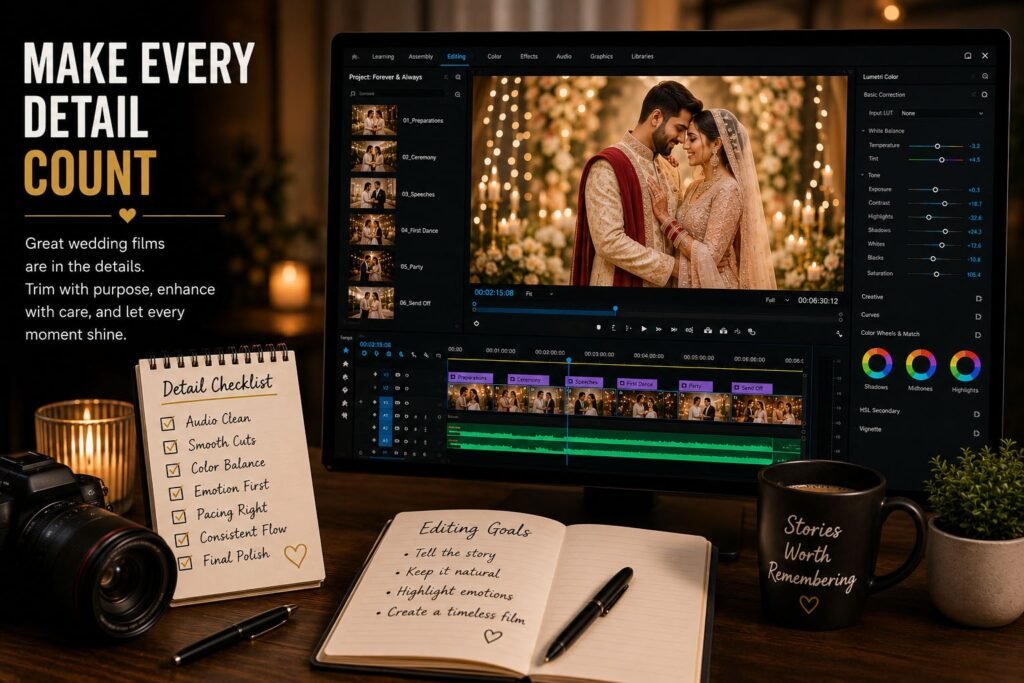
One of the underrated Wedding Video Editing Tips is paying attention to small visual distractions. Temporary blemishes, sensor dust, flickering lights, exposure inconsistencies, and distracting background objects can reduce overall quality.
Subtle skin retouching, stabilization, and cleanup work help create polished wedding films without making footage look fake.
At Pixels Artistry, we often help creators improve the visual consistency of their wedding projects through professional editing and retouching workflows designed specifically for cinematic content.
Small improvements may seem minor individually, but together they create a much more professional final product.
Build Emotional Highlights Early
One of the best Wedding Video Editing Tips for improving efficiency is creating a rough emotional highlight sequence early in the editing process.
Before focusing on technical polish, we build a simple emotional structure using the strongest moments from the day. This allows us to test pacing, storytelling, and music flow before spending hours on detailed adjustments.
Once the emotional foundation feels strong, we refine transitions, audio, color grading, and visual polish.
This workflow saves time because it prevents unnecessary editing on scenes that may later be removed or shortened.
Professional editors often focus on emotional structure first and technical perfection second.
Learn When to Cut Clips Shorter
Many beginners hold shots for too long because they are emotionally attached to footage. One of the most practical Wedding Video Editing Tips is learning how to trim aggressively while preserving emotional impact.
Shorter clips often create more energy and keep viewers engaged. If a scene does not add emotion, storytelling, or visual value, it probably does not need to stay.
Professional wedding films feel polished partly because every shot serves a purpose. Clean edits create stronger pacing and more emotional intensity.
This does not mean rushing every scene. Emotional moments still need breathing room. The key is finding balance between cinematic pacing and audience attention.
Export Settings Matter More Than You Think
You can spend days creating a beautiful wedding film and still ruin quality with poor export settings. Proper rendering is one of the final but most important Wedding Video Editing Tips.
We always export using settings optimized for the platform where the video will be shared. Social media, YouTube, Vimeo, and client downloads all require different compression strategies.
High bitrate exports preserve detail and reduce ugly compression artifacts. We also check audio settings carefully because incorrect exports can reduce clarity dramatically.
Always review the exported file before delivering it to clients. Small glitches, missing frames, or audio sync issues are easier to catch before final delivery.
Why Professional Editing Services Save Time
Wedding editing is incredibly time-consuming. Between sorting footage, syncing audio, color grading, stabilizing clips, and creating cinematic pacing, even short wedding films can require dozens of editing hours.
That is why many creators eventually outsource part of their workflow. Professional editors help maintain consistency, reduce turnaround time, and improve overall production quality.
At Pixels Artistry Video Editing Services, we work closely with wedding filmmakers who want cinematic edits without spending endless hours behind the timeline. Whether it is color correction, storytelling, audio cleanup, highlight films, or full wedding edits, we help creators deliver polished results faster.
Outsourcing also allows videographers to focus more on filming, client relationships, and growing their business instead of getting overwhelmed during peak wedding season.
Final Thoughts on Wedding Video Editing Tips
Learning professional Wedding Video Editing Tips takes practice, patience, and experience. Every wedding is different, which means every edit requires creative decisions that balance storytelling, emotion, pacing, and technical polish.
The good news is that improvement happens quickly when you focus on the right areas. Better storytelling, cleaner audio, stronger pacing, thoughtful color grading, and smoother transitions can completely transform the quality of your wedding films.
The most important thing to remember is that wedding editing is not about showing off effects. It is about preserving emotions and creating memories that couples will treasure for years.
As you continue refining your workflow, these Wedding Video Editing Tips will help you move from beginner-level edits toward cinematic professional results. Focus on consistency, emotional storytelling, and intentional editing choices, and your work will naturally stand out.
If you ever need help creating polished cinematic wedding films, Pixels Artistry is here to help with professional video editing services designed for creators who want high-quality results with faster turnaround times.